
How to Build a Single-Disease Hospital Around a Dedicated Team
Dr Smit A. Desai of Heyansh Hospital, Ahmedabad, explains how an oral cancer centre organises rehabilitation, counselling, patient education and training so treatment does not end at the operating table.
The problem: surgery is only part of what the patient needs
Oral cancer surgery removes disease from the mouth, jaw, tongue or palate. It also touches the three things a person uses every day: speaking, swallowing and chewing. Dr Smit A. Desai, a consultant oral cancer surgeon and founder of Heyansh Hospital in Ahmedabad, says the first question patients ask is usually not about survival. It is whether the face will look crooked, whether the jaw will change, and whether they can go back to society.
A general hospital can remove a tumour well and still leave a patient with a feeding tube, poor speech and no clear plan for the months after. Dr Desai built his centre around the opposite idea. In his words, the aim is that a patient can eat without a tube, look acceptable, and return to personal, professional and social life.
What Dr Desai describes at Heyansh
One disease, so the team can specialise. The centre treats only oral cancer. Dr Desai says this lets the whole system be organised around what these patients need from diagnosis to recovery.
Rehabilitation is a team, not an add-on. He lists several groups that work alongside the surgeons:
- Plastic surgeons for reconstruction.
- A speech and swallowing team, with exercise videos patients follow regularly.
- Maxillofacial prosthodontists, available routinely at the centre, for cases where a jaw or part of the palate has been removed.
- A counsellor who works on patients' morale, along with educational videos.
He explains that his own training in oral and maxillofacial surgery shaped this view. Dentists, he says, spend years looking inside mouths and understand how to rebuild function there. He notes that in many countries oral cancer is treated by maxillofacial teams, and that large Indian teams increasingly keep at least one such person for rehabilitation.
Planning before the operating theatre. The team uses imaging and 3D printed models of the patient's skull. Surgeons and plastic surgeons do a mock surgery on the table the day before, including a template for the bone that will be taken from the leg. Dr Desai says this saves operating time and anaesthesia time, which benefits the patient. He also notes that a longer operation is not a better one. In his experience, these operations usually take three to six hours.
Nursing and monitoring for complex reconstruction. In free flap (microvascular) surgery, he says, the joined vessels must stay undisturbed for at least 72 hours, so the patient has to hold one position. His team developed special pillows for this, and nurses, fellows and doctors check the patient round the clock. He describes the team as large, with three surgeons and two plastic surgeons among the people involved.
A communication rule. Staff do not talk about crying or dying in front of patients. Dr Desai says he refuses to let a patient be put down, and that he never promises 100% to anyone. He argues that anyone who offers a guarantee in cancer is not being honest.
Explaining the plan before surgery
Dr Desai says most patients do not know what to ask a cancer surgeon. He estimates that eight in ten do not. So his team explains, without being asked, what will be done, what may happen afterwards and what the patient should expect. He, his staff or his fellows may spend half an hour to an hour with a patient and family before the operation. Families are also told the likely outcomes, including what will be different after surgery, so that expectations stay realistic.
He also encourages patients to ask their treating doctor, before spending, what the chance of benefit is, whether for surgery or for immunotherapy.
Telling families where to stop spending
Dr Desai stresses that cancer is not a one-chance event. Recurrence can happen, and he has seen families put everything into the first round, then return six or seven months later with nothing left. His centre explains this to families and advises them against unnecessary costs. He says government schemes are working well for many patients, and that his stated aim is standardised protocols and affordable care. He adds that money alone does not decide outcomes in cancer.
Keeping the team's knowledge current
- He attends at least two conferences a year, one national and one international.
- He reads journals and recent evidence regularly.
- The centre is an official fellowship centre, and one fellow joins each year after an exam.
- Every Saturday the team holds seminars and shares knowledge.
He also runs free awareness workshops for college students and in small villages, which he treats as part of the centre's work.
Mistakes to avoid
- Treating rehabilitation as an afterthought. Dr Desai says patients decline surgery because they fear what life will look like afterwards.
- Equating long surgery with good surgery. He calls this a common myth among patients.
- Leaving patients and families to guess. Unanswered questions push families to comparisons and rumours.
- Promising certainty. He says no honest cancer doctor gives a 100% guarantee.
- Letting families spend everything at once. Advice on where to stop is part of good care.
What you can apply this month
- List every function your patients lose or risk losing, then check who in your team owns each one.
- Set up a written pre-operative explanation covering the plan, expected changes and recovery steps, and record that it was given.
- Agree a team rule for how prognosis is discussed in front of patients.
- Add a counsellor session or a short educational video to your standard patient pathway.
- Ask your finance team to prepare a simple cost outline so families can ask questions early.
- Fix a regular slot for internal teaching, and set a target for conferences each doctor attends.
- Plan one community awareness session with a local college or village.
Check any change against your own clinical governance and the NMC advertising rules before you publicise it.
More on Medvyn
 Health news
Netaji Subhas Medical College Gets NMC Nod for 44 More PG Seats
New · 5 hours ago
 Health insight
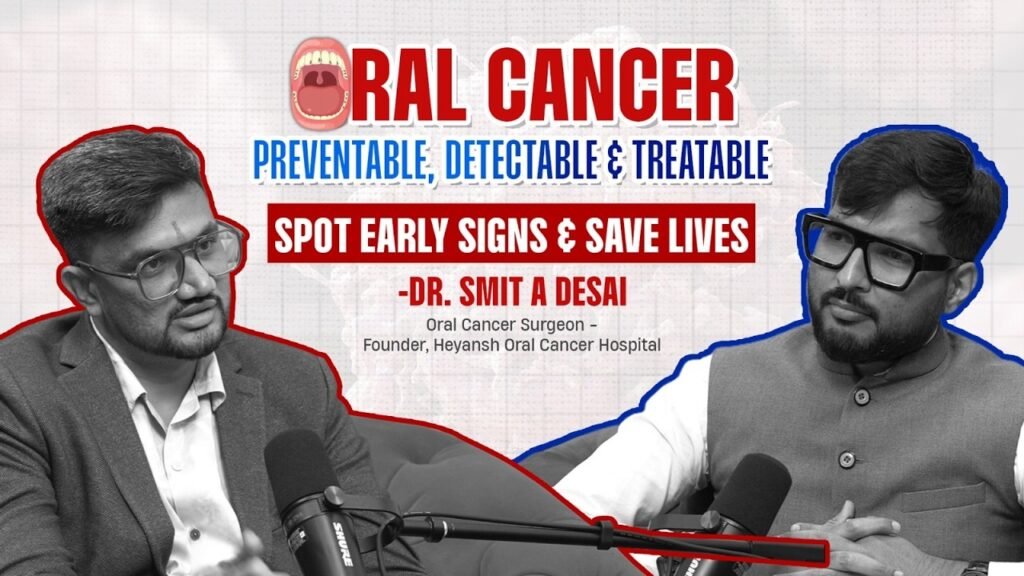
What Causes Oral Cancer? A Surgeon Separates Cause from Myth
New · 5 hours ago
 New episode
Health Khabri Ep 18 | 30,000+ Free Eye Surgeries, ₹500 Cr Healthcare Push, JP No Jalso & More
Latest episodes