Dr Pratap Solanki: From a Village Near Halvad to Directing Hospitals
A farmer's son who lost his mother at five, left home for a hostel early, and built a hospital group from a bank balance of Rs 1,282.

On a night in 2021, Dr Pratap Solanki sat on a footpath in Narayanpura, Ahmedabad, listening to a proposal. He had come by state bus after a full day of duty at a government medical college in Godhra. His friends from Morbi wanted to open a hospital in Jamnagar and needed someone to run its gynaecology and management.
He said yes within five minutes. The partnership would cost several crore rupees. His bank balance was Rs 1,282. The bus ticket back, bought for Rs 147, left him with less. He still keeps the ticket.
"I told them I have no money, but I am fully willing," he recalls. "They said, don't worry, we will sort out a loan."
A tiled-roof home and a father who never stopped working
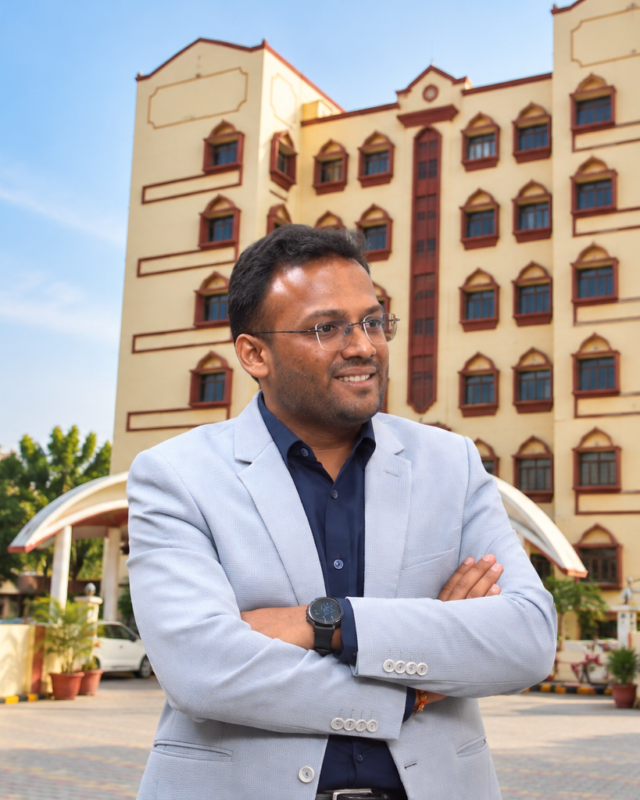
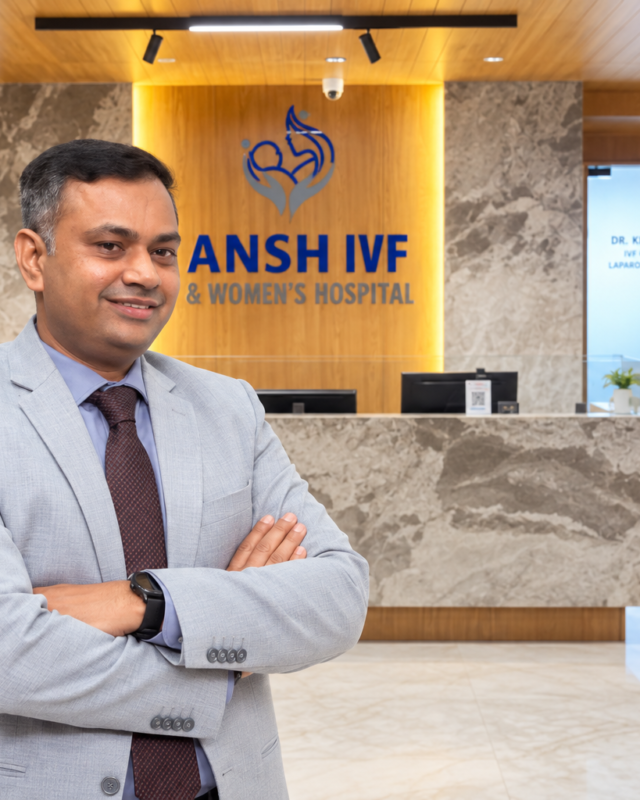
Dr Solanki is the director of Aayush Group of Hospitals and head of the gynaec laparoscopic department at its Jamnagar unit. He grew up in a village near Halvad of roughly 1,000 to 1,200 people. His father farmed there, and still does. The family home still has a tiled roof.
His father's own story set the tone. When he was 16, his father (Dr Solanki's grandfather) was hurt in a road accident with a state transport bus. He had a fractured thigh bone and was diabetic. In the 1970s, care meant a long stay in a distant civil hospital, and the fracture did not heal well. He died, leaving a teenage eldest son with six younger siblings still to be married.
The young man managed it. He settled all his siblings, then grew the family's ten bigha of land to several hundred. "He built it from zero," says Dr Solanki. The lesson that reached the children was simple: routine work is what everyone does, and your work should make a difference.
When Dr Solanki was five, his mother died. His elder brother, two years older, left for a Navodaya school. Soon the younger boy decided to leave too, mainly so his father would have one less burden. He insisted until his father agreed, and he moved to a hostel in Surendranagar.
Hostel nights, a switch of streams, and a father's wish
Homesickness was real. When his father phoned, he would cut the call early. "If we cried, Papa would weaken and call us back to the village. So we cried in secret, never in front of him."
Outside the village he saw how large the world was. Back home he had always stood first in a class of about 50. Now he understood that to keep pace he would have to take four steps for every one that others took. He finished Class 10 among the district's top students.
His path to medicine was not a straight line. He first chose the biology stream because a close friend did. After a weekly test he lost marks on biology diagrams, decided he was not a biology person, and switched to maths. Then, during Diwali break, his father quietly said he wished one son could be an engineer and the other a doctor. His elder brother was already studying engineering. Dr Solanki went back to school and moved to biology again, catching up half a year of syllabus.
He chose Jamnagar's government medical college over a seat in Baroda, because he had heard that many good doctors had trained there. He had never seen the city.
Choosing surgery, and choosing the risk
His first preference for postgraduate training was orthopaedics, which his rank did not allow. He took gynaecology, because he wanted to operate. In the villages, he says, elders bless a young person by saying "become a big surgeon", and that stayed with him.
Seniors from his college had by then joined Aayush Hospital in Morbi and became partners. When they invited him, he wanted in. His father said no. He advised him to finish his studies, serve in a government post at Halvad for five or six years, and build savings first. Debt, he feared, could end badly for a young man.
A year later, on that footpath, Dr Solanki decided himself. His father then stopped speaking to him for three or four months. Dr Solanki became a partner on 15 September 2021. He had never filed an income tax return, so a loan was not easy. He filed his first, a nil return, in 2022, and borrowed in small amounts from non-bank lenders at around 16 per cent interest.
The group took over the Oswal hospital in Jamnagar, a Jain trust hospital established in 2002 that had stopped functioning. After six months of renovation it opened on 26 June 2022. His father came to the inauguration and saw it for the first time. Dr Solanki says he has not taken a rupee from his father since the day he began.
His father still does not praise him directly. "But he tells people in the village what his son has done," he says.
The Kutch camp that decided his direction
In 2023 he joined a camp near Mandvi in Kutch, run by a trust that screens villagers and operates on those who need surgery. His team performed 42 hysterectomies in one day. In the outpatient clinic, they saw 500 to 600 women in a day, some with problems of 15 or 20 years.
He asked a trustee why women came so late. The answer stayed with him. Many do not come because they ignore their own health, he was told, and some husbands refuse. The concern is not the cost, but who will cook and run the house during ten days in hospital and months of recovery after open surgery.
"I cannot change that thinking," he decided. "What I can do is make sure the woman is back to her daily life as quickly as possible."
That led him to laparoscopy. In his practice, he says, a patient after laparoscopic hysterectomy usually goes home in 24 to 36 hours, walking. He allows light household work from the third day and removes stitches around the tenth day. He has now performed more than 10,000 laparoscopic surgeries, with a special interest in endometriosis.
He is clear on one point for women reading this. Pain during periods that is worse than usual, irregular cycles, pain during intercourse or while passing stools should not be brushed aside. A gynaecologist's opinion early on, he says, gives better results.
What he believes now
The group has grown from one hospital to several, and he is a director in each. He says the partners began with one idea: if the patient is treated well, the business follows. He also says they never looked at a patient's background, and that the care given to a wealthy patient should be the care a villager gets.
On hiring, he describes meeting doctors in person, even travelling to Bokaro to meet a cardiologist, much as a buyer taps a clay pot to judge its sound.
His advice on partnerships is plain: choose someone you trust before money enters the relationship, and whose expectations of life match yours. "Don't become partners just to split a plot into four."
As for rewards, he points to the patient who walks out smiling after years of pain. "No money can fulfil that feeling," says Dr Solanki.
More on Medvyn
 Health news
46 Indian paediatricians, doctors, scientists on Stanford’s 2026 top 2% list
New · 2 hours ago
 Health insight
Oral Cancer Self-Check: Five Minutes in the Mirror Can Catch It Early
New · 4 hours ago
 New episode
Health Khabri Ep 18 | 30,000+ Free Eye Surgeries, ₹500 Cr Healthcare Push, JP No Jalso & More
New · 1 day ago