From Junagadh to Surendranagar: Dr Vaishali Makwana on building a skin and hair clinic
Dr Vaishali Makwana, a dermatologist for over 13 years, explains how she built a full-service skin and hair clinic in Surendranagar, and why patient trust matters more to her than numbers.
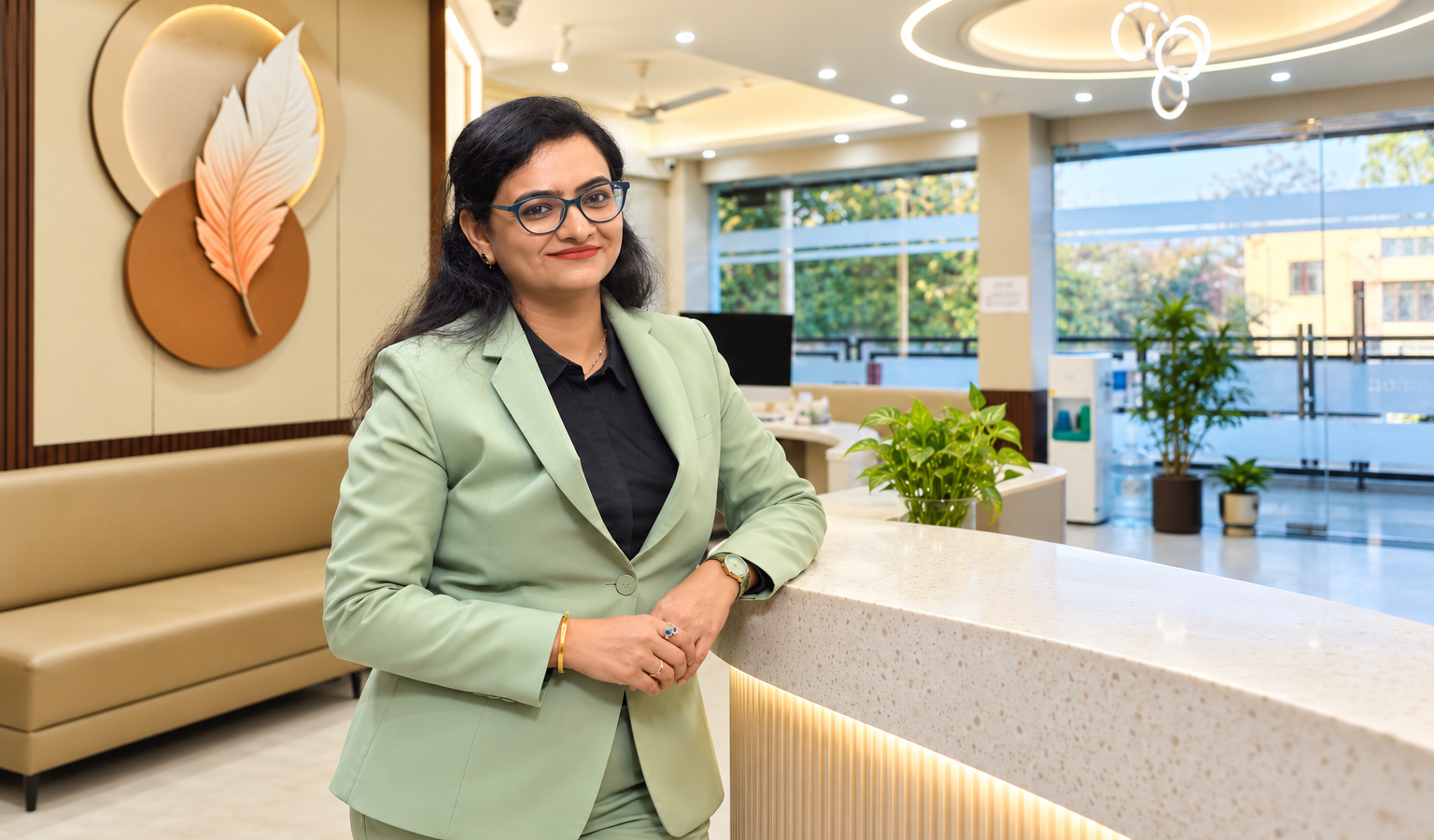
Some patients now walk into Dr Vaishali Makwana's consultation room with the treatment already chosen. They have searched online, compared prices in metro cities, and arrived with a request: "Doctor, I want the CO2 laser."
For a dermatologist in Surendranagar, this is a very different room from the one she first sat in thirteen years ago. How it changed, and what she built around it, is the story of her career.
A dream handed down by two government employees
Dr Makwana comes from Junagadh. Her parents both worked in government jobs, and they had one wish: that their daughter or son would become a doctor.
She took that wish on as her own. She worked hard through school and was a board ranker in Class 10. She then joined BJ Medical College for MBBS and completed her MD in Skin & VD at VS Hospital. She was a gold medalist in dermatology at Gujarat University, and her research papers have been published in international journals.
The pull towards medicine, she says, began with respect. "I used to look at other doctors and wonder how they could heal people, how much knowledge and power they had." Her parents' dream and her own slowly became the same dream.
Getting to where she is now was not quick. "It took so many years to achieve this position," she says. She came back to Surendranagar and started a private clinic.
Why skin, and not a "bigger" speciality
She had other options. Orthopaedics and gynaecology were both on the table. She chose dermatology, and she knows how that can sound to others: what is there in a skin doctor's work?
She says the answer is clear to anyone who has spoken to patients with long-standing skin disease. Many conditions last for years. Some patients lose confidence and interest in life. A young person losing hair at 20 may begin avoiding social functions.
Dr Makwana is plain about the limits. These conditions are usually not life-threatening. But treating them gives people something back. "If I can treat this, I can change the patient's life. That is the biggest reward."
She also liked that the branch holds three things together: science, aesthetics and a patient's confidence.
It was not a decision made with revenue in mind. When she started, she says, she did not think about it at all, because this was her dream branch.
Waiting for trust in a tier-2 city
Starting out in Surendranagar meant starting with few patients and a small setup. Patients tend to go first to senior doctors who see large numbers every day. A young doctor quoting a fee for a procedure could be met with doubt.
Her advice to those about to begin private practice is patience. As the years pass, people get to know you, and word of mouth does the work. Those patients, she says, are the ones who stay for years. She also asks young doctors to hold on to their ethics and not choose wrong paths to get patients or money.
The smaller city also gave her something she values. Patients here still trust their doctor, she says, in a way she found missing in some metro cities, where she has seen trust and relationship problems between patient and doctor. Here, patients follow the plan they are given.
Because all the treatments are now available at her clinic, she rarely has to send patients to Ahmedabad or Rajkot.
The patients are varied. Her clinic sees people from about 20 to 50 years of age, and a good number of children. Among young people, pigmentation and hair fall are common, especially hair fall in young men. Villagers who work in farms and in heat and sweat more often come with fungal infections and allergies. Those in their 20s and 30s often ask about scars, hair transplants and tattoo removal.
Thirteen years of change
The first big difference, she says, is how people arrive. Thirteen years ago, patients often came only after home remedies and Ayurvedic treatment had failed. Even then, she had to persuade them to take medicine continuously for three to six months.
Today's patients are earlier and better informed. Some twenty-year-olds come with no disease at all, only asking for a skincare routine. Families from villages bring a child with chickenpox or a rash to a skin specialist in the city. Her parents' generation, she notes, might ignore moles, neck warts and hair fall for years.
The tools have changed too. Diagnostic options have grown, lasers are more precise with fewer side effects, and newer biologic medicines target the molecular process behind conditions such as psoriasis. Regenerative treatments are now available for hair.
Informed patients bring a new task. She does not mind that they search online, and she finds it makes explaining costly procedures easier. But she holds a line. "I do not do any procedure only because the patient insists." She diagnoses first, explains the options and the likely course, and proceeds only if it is truly indicated.
She also uses technology herself. In rare cases where even a biopsy leaves the diagnosis unclear, she says she has turned to ChatGPT as one more aid. She has also used it to show patients a simulation of how they might look a year after a hair transplant.
Late lessons, and what she wants to build
Her main regret is about social media. She knew it mattered, but spent a year thinking about it before hiring a proper agency. "If I had started marketing from the beginning, things would be different today." Her training taught her to treat patients, she says, but not what investment or marketing means. She now tells young doctors to learn this early and to see it as investment.
She has applied the same thinking to equipment. She chooses from two or three brands she trusts. She does not calculate how many patients a machine will bring. She treats it as a lasting asset, and says patients come once people know the clinic has the technology.
She keeps learning. She reads research papers, attends national and state conferences, and rings her postgraduate teacher every six to eight months to check her approach on difficult cases. "Do not bring your ego in front of the patient's benefit."
Her advice to medical students interested in dermatology is firm. Become a good cosmetologist, but learn clinical dermatology first, along with its ethics and standard treatments. "Do not take shortcuts. Do not rely on Instagram trends."
She has a warning for patients too. Short courses and salons doing procedures are growing in number, so she says to check the doctor's degree: MBBS with MD in Skin & VD, or a DVD diploma. For hair transplants, she adds, a dermatologist or a plastic surgeon, with the doctor actually present. Anyone with a lasting skin or hair concern is best served by seeing a qualified dermatologist for their own situation.
For Sparkle, she wants to expand. But success, she says, is not a count of patients or procedures. "Each and every patient should have trust in me."
Her own golden tip is the one she gives in the clinic every day: do not experiment on your skin or chase a perfect filter. The goal is healthy skin and healthy hair, not looking twenty years younger.
More on Medvyn
 Health insight
Hair Fall: Causes, When to See a Doctor and What Helps
More with Dr Vaishali Makwana
Health insight
Pigmentation and Dark Patches: Why Over-the-Counter Creams Can Backfire
More with Dr Vaishali Makwana
Health insight
Why Pimples Keep Coming Back and When to See a Dermatologist
New · 2 hours ago