
Choosing a Smaller City and Staying Sharp: Lessons from a Young Physician
Dr Sachin Agarwal left Ahmedabad for Jamnagar on a one-year trial and stayed. His habits for learning and advice for students offer a practical template.
The problem: good physicians are hard to place and harder to keep
For anyone building or running a hospital outside a metro, the question is familiar. How do you bring a well-trained physician to a smaller city, and how do you make sure that physician keeps growing once there?
Dr Sachin Agarwal, MD, Consultant Physician and Critical Care Specialist and Director of Aayush Hospital in Jamnagar, offers a useful case. He did his MBBS at Baroda Medical College and his MD in Medicine at LG Hospital in Ahmedabad, where he grew up. He then chose Jamnagar, and he is still there.
Why he moved from Ahmedabad to Jamnagar
Dr Agarwal does not describe a dramatic decision. He says he is a calm person who does not enjoy chaos, and that city traffic and city life never suited him much. When Aayush approached him to lead medicine at its new Jamnagar unit, he saw two things in the offer.
The first was autonomy. He would run a medicine unit single-handedly, with a free hand, inside a 160-bed multispecialty hospital. The second was low risk. His father suggested he try it for one year and see.
Exposure was not his worry. During MBBS and MD at government and teaching hospitals, he says, emergency admissions ran above 100, so he had already seen and treated a great many patients. What the move offered was ownership of a unit.
One year became a longer stay. He says the patients suited him, he enjoyed the work, and the people of Jamnagar accepted him warmly even though he arrived as an outsider. He calls them welcoming and helpful.
He is also frank about the cost. Emergency work means being on standby around the clock, and personal and family time suffers. He says that on some days he wonders whether a calmer profession would have been easier, though in 99% of cases the work gives him satisfaction.
How he keeps updated
Smaller cities can mean fewer colleagues down the corridor. Dr Agarwal's answer is a deliberate routine:
- Daily journal and article reading. He reads newly published papers every day.
- Case discussions with peers and seniors. Friends who are training or practising in super-specialties, and his own seniors, give him regular input on what they are seeing.
- Conferences. He attends monthly, six-monthly and yearly meetings. Afterwards he reads the reference articles and the trials behind any new drug that was discussed.
- Textbook updates. He calls Harrison's Principles of Internal Medicine the physician's Gita. A new edition arrives every three to four years, and he checks what has changed in trials and drug recommendations.
- Digital tools. He uses a medical AI reference application to read new articles and study diseases.
None of this is exotic. The point is that it is a routine, built from sources of different kinds: published evidence, peers, seniors and reference books.
His advice to students who want to practise medicine
Hospital founders often mentor young doctors, so his advice to students is worth borrowing.
Push for clinical exposure. He says to get fully involved in medicine postings from the second year of MBBS. If seniors or residents do not teach, go and ask anyway. In his words, you learn in proportion to the effort you put in, and this holds in every field.
Master the basic subjects. Physiology, biochemistry, pharmacology and pathology, he says, are the base. Medicine, as he puts it, is understanding how normal physiology turns into disease, which signals or mediators drove the change, and how reports and treatment follow from that.
Treat history taking as an art. One history is rarely enough. You may need to go back and ask again, for example whether the patient had a certain problem years ago, because that is where clues appear.
Keep empathy high and ego low. Dr Agarwal calls ego a poor quality in a doctor and advises staying away from those who carry it. He says a smile and calling a patient by name make a visible difference. In the ICU, he says, two minutes of proper conversation tells a patient that someone is with them, and he sees that as a form of psychological medicine.
Mistakes to avoid
- Treating a smaller city as a step down. Dr Agarwal found responsibility and a free hand there, not a lack of opportunity.
- Offering a role without ownership. What drew him was running a unit himself. A title without real decision-making power is a weaker pitch.
- Assuming experience will keep a physician current. He relies on a structured routine of reading, discussion and conferences.
- Ignoring workload honestly. He openly says on-call life takes a toll on family time. Planning for that early is better than discovering it later.
- Letting learning depend on seniors volunteering. His advice is that juniors must seek teaching, and units should make it easy for them to do so.
What you can apply this month
- Review how you describe a physician role in a smaller city. Lead with the scope of the unit and the independence it offers.
- Offer a time-bound trial arrangement for a new senior hire, as Dr Agarwal's father suggested to him, so that both sides can decide with confidence.
- Set a fixed weekly slot for journal reading and one case discussion with peers or visiting seniors.
- Ask your physicians to share takeaways after every conference they attend, including the trials behind any new drug.
- Keep the current edition of a core medicine textbook available to your team, and note when a new one is due.
- Ask junior doctors to take a complete history, then revisit it the next day. Make that expectation explicit.
- Add one line to your hospital culture: call patients by name, and spend two unhurried minutes with every ICU patient.
Every doctor's situation is different, so adapt these to your own hospital, staff and patients.
More on Medvyn
 Health news
SVP Hospital Ahmedabad: PMJAYના સાધનોના ગેરકાયદે વેચાણનો પર્દાફાશ, 8 રેસિડેન્ટ ડૉક્ટરો તપાસ હેઠળ
New · 18 hours ago
 Health insight
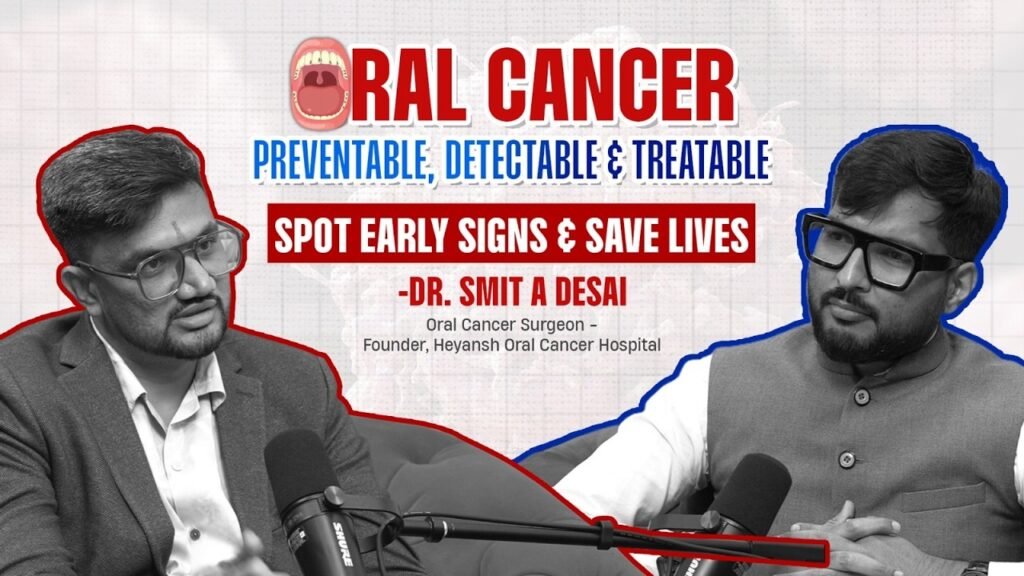
Oral Cancer Self-Check: Five Minutes in the Mirror Can Catch It Early
Latest insights
 New episode
Health Khabri Ep 18 | 30,000+ Free Eye Surgeries, ₹500 Cr Healthcare Push, JP No Jalso & More
Latest episodes